IoT Sensing
Flow, TDS, fluoride, pH, turbidity, tank level, solar yield and battery state are streamed from every kiosk over GSM/4G, and buffered on the device when the network drops.
- Water quality
- Energy telemetry
- Tamper alerts
We take on fluoride with a patented, chemical-free process, run every kiosk on the sun, and watch every drop with AI. Arosia brings together nature's chemistry and machine intelligence so every community gets safe, affordable drinking water.


Across India's fluoride belt, groundwater often carries several times the safe limit, which leads to dental and skeletal fluorosis. Our patented electrocoagulation process turns a small electric current into a precise coagulant. Fluoride is captured and filtered out with no chemicals to dose, no sludge-heavy alum and no RO reject stream.
The same cell also strips out arsenic, iron and bacterial load. Nanofiltration then catches pathogens, viruses and microplastics, while the minerals that make water good to drink stay in.
Reference: IS 10500:2012 drinking-water fluoride limits. Raw value shown is illustrative for high-fluoride aquifers.
| Arosia EC + NF | Conventional RO | |
|---|---|---|
| Chemical dosing | None | Antiscalants |
| Water wastage | ~2–4% | High reject stream |
| Essential minerals | Retained | Stripped |
| Cost-effectiveness | ~60% better | Baseline |
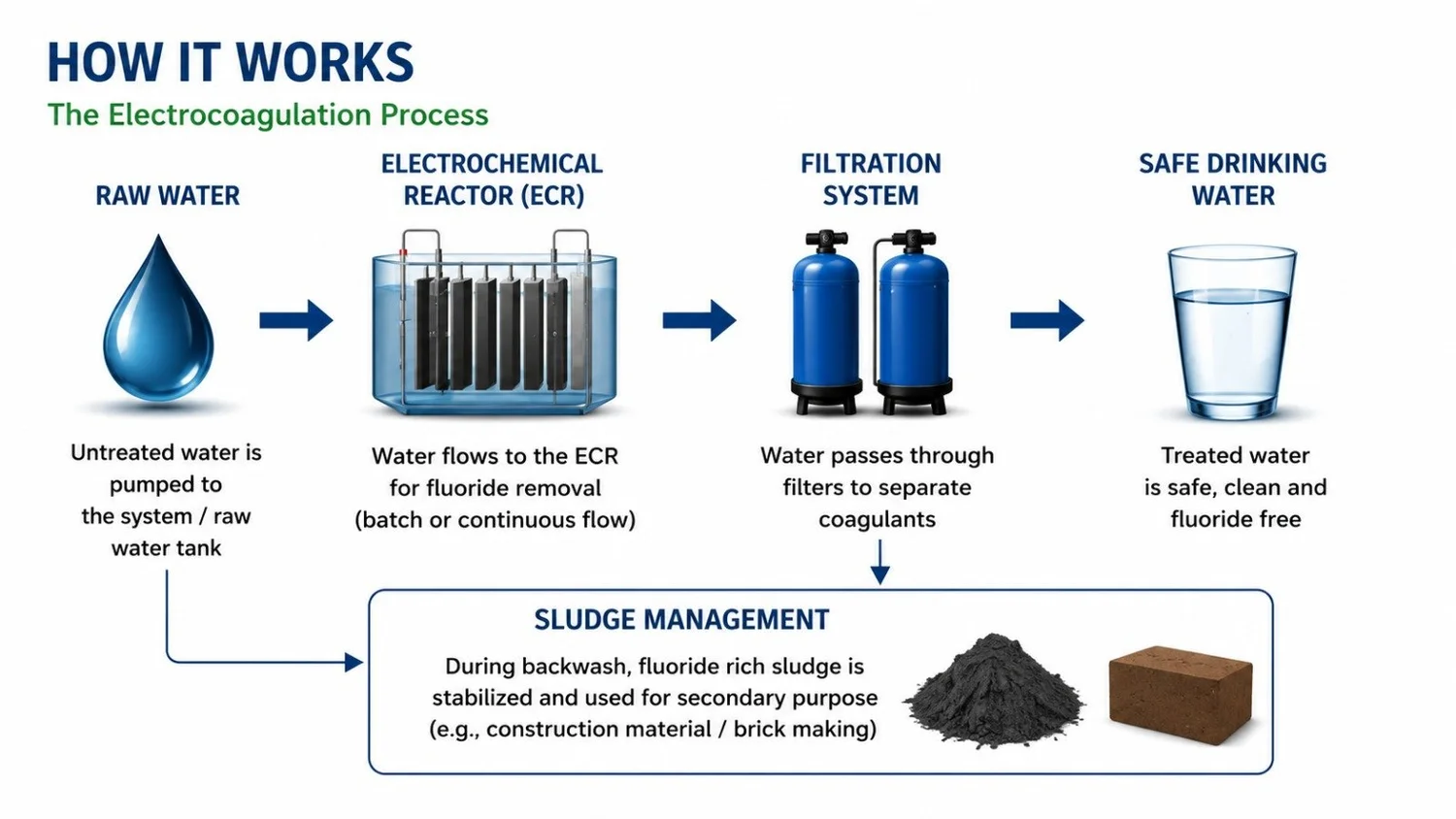
Inline probes read fluoride, TDS, pH and turbidity in the raw water, and that reading sets the dose for every batch.
Electrodes release metal ions in situ. These bind fluoride and arsenic into stable flocs, with no added chemicals.
The flocs settle out, and nanofiltration membranes then remove pathogens, viruses and microplastics.
Post-treatment sensors confirm water quality before it is dispensed, and every reading is logged to the cloud.

Water you can't see can still make you sick. Each Arosia kiosk tests itself continuously. Sensors read the water before and after treatment, a bacteria check looks for E. coli, and the tap locks automatically if anything falls outside safe limits.
E. coli in drinking water is a sign of faecal contamination, which can carry cholera, typhoid and diarrhoeal disease. India's standard IS 10500 and the WHO guidelines both set the same rule: no E. coli detectable in any 100 mL sample.
How our water quality monitoring works →
Limits per IS 10500:2012 (acceptable). Readings shown are illustrative.
Turbidity, ORP, UV intensity and flow are read every few seconds. A sudden change in these is often the first sign of a contamination risk.
Scheduled samples go through a rapid enzyme-based E. coli test. Field results arrive in hours instead of the days a lab takes.
If a reading fails, the kiosk stops dispensing on its own and flushes the line. The operator and the local authority are alerted at the same time.
The system runs extra disinfection and replaces any faulty part. Dispensing resumes only after a clean retest, and every step is logged.
Every kiosk is a node in one connected water network, which runs from the sensor up to the cloud.
Flow, TDS, fluoride, pH, turbidity, tank level, solar yield and battery state are streamed from every kiosk over GSM/4G, and buffered on the device when the network drops.
A web dashboard for operators and governments, plus a consumer app for UPI and wallet payments and home delivery of cans. Every transaction is mapped to a user, so subsidies can be targeted.
Models learn how each site behaves, including demand cycles, aquifer drift and component wear. They then act on that knowledge: tuning the dose, scheduling maintenance and balancing energy before anyone notices a problem.
Off-grid PV with smart battery management, plus grid-hybrid where it is available. Each off-grid kiosk avoids about 2,500 kg of coal burning every year.
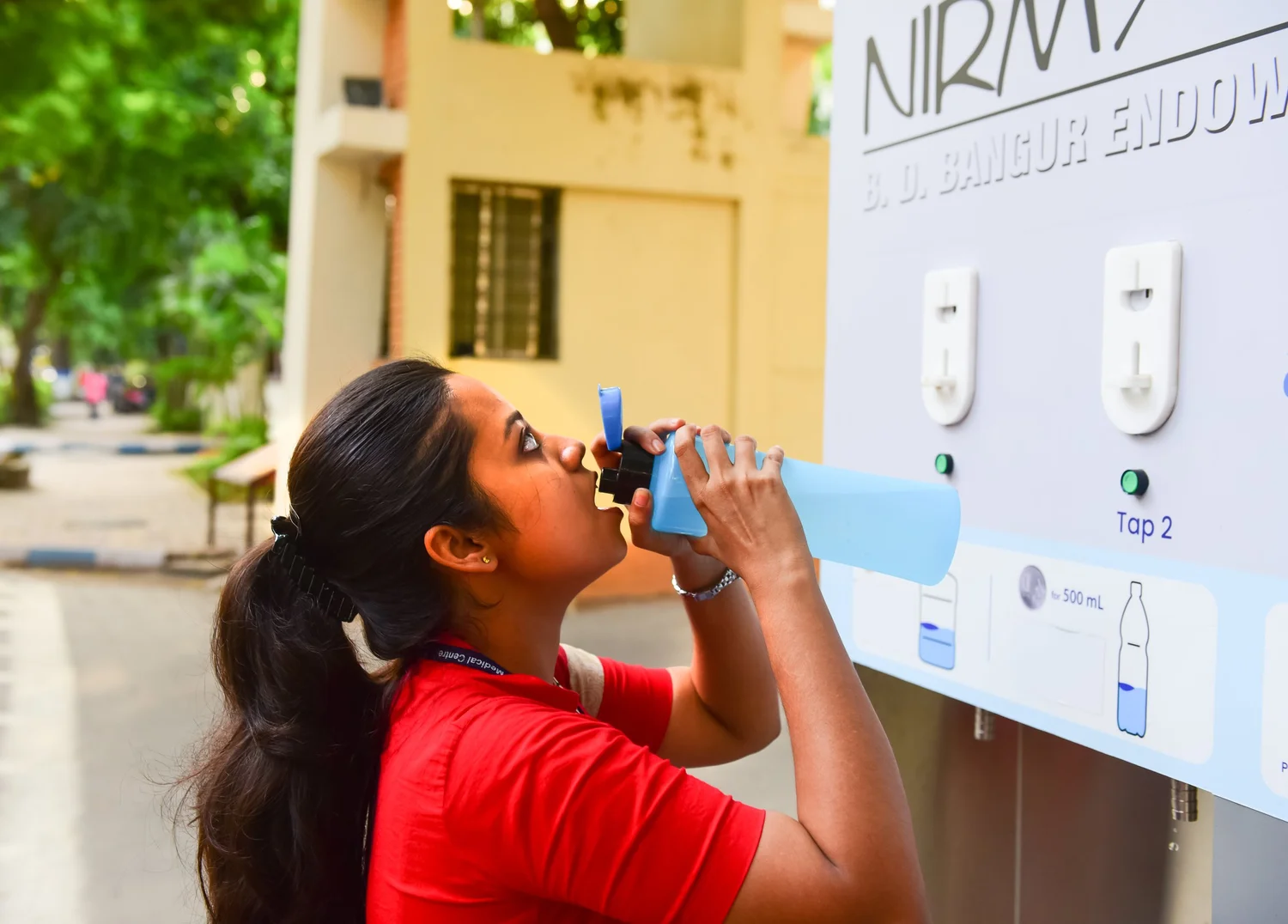
Cashless, pay-per-litre kiosks that anyone can use without help. They are built for villages, schools, transit hubs, industrial colonies and dense urban neighbourhoods.
Litres served, people reached, CO₂ and plastic avoided are all verified from transaction data. The reports are ready for CSR, ESG and grant reviews.
The twin turns sensor streams into a model you can simulate. Pick a scenario below and watch the AI respond.
All systems nominal. The fluoride dose is tuned to the morning aquifer reading.
Interactive simulation for illustration only. Values are synthetic.
Membrane, electrode and pump wear are forecast days ahead, so technicians arrive before a failure does.
Aquifer drift and seasonal spikes are spotted early, and treatment adapts on its own.
Weather-aware charging and load shifting keep off-grid kiosks dispensing through the monsoon.
New sites, capacity upgrades and subsidy policies can be tried on the twin before anything is built.
The intelligence comes in four layers. Each turns the data from the layer below into a better decision.
Request a platform demo →Multi-sensor fusion cleans noisy field data, calibrates drifting probes and fills gaps when connectivity drops.
Site-specific models learn each aquifer's chemistry, each community's demand rhythm and each component's health profile.
Time-series forecasting and anomaly detection flag contamination risk, demand surges and failures before they happen.
Closed-loop control adjusts EC current, backwash cycles and energy use, and raises work orders automatically. People stay in charge of every critical decision.
Lessons from one kiosk improve all of them. A fix discovered in Tripura protects a kiosk in Odisha the next morning.
We don't fight nature with chemicals. We learn how nature works, and then use intelligence to make it work at scale.
Our core mission. We deliver safe, affordable drinking water and treat access to it as a human right, especially in fluoride- and arsenic-affected regions.
Preventing fluorosis and waterborne disease at the source.
Solar-powered kiosks for off-grid communities.
Patented technology combined with IoT and AI.
Urban kiosks that cut down on single-use plastic bottles.
2–4% wastage and refillable containers.
150+ tonnes of coal burning avoided every year.
Working with government, CSR and community partners.
Dispensed across our network, and every litre is traceable to a transaction.
Villages, worker colonies, schools and city neighbourhoods across eastern India and beyond.
Every year, for each off-grid solar water ATM, adding up to more than 150 tonnes across the fleet.
Refill culture at urban kiosks replaces single-use bottled water.
Lower capex and opex than conventional treatment, which keeps the price per litre affordable.
Our patented electrocoagulation needs no chemical additives.


OFF-GRID · SOLAR
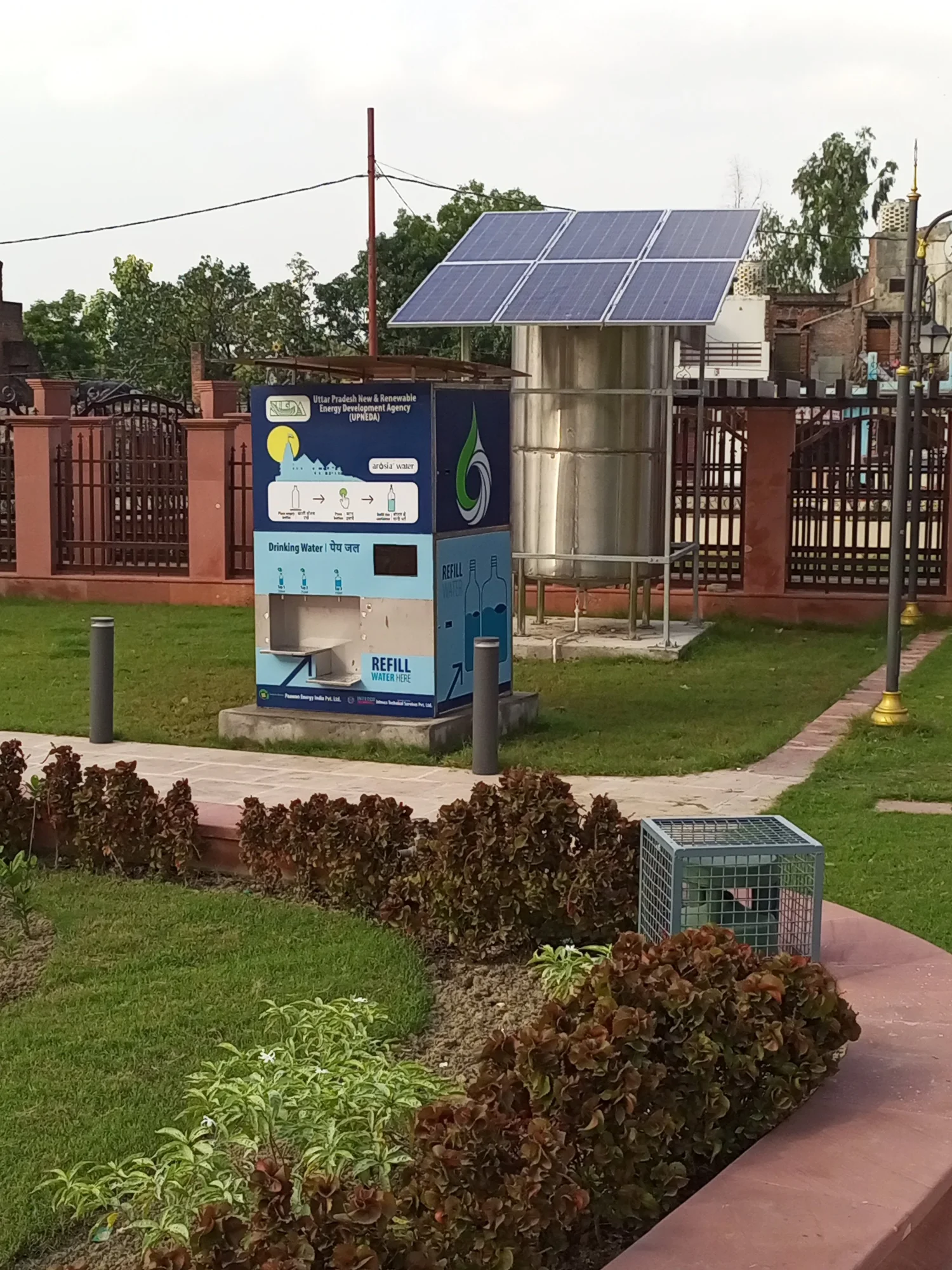
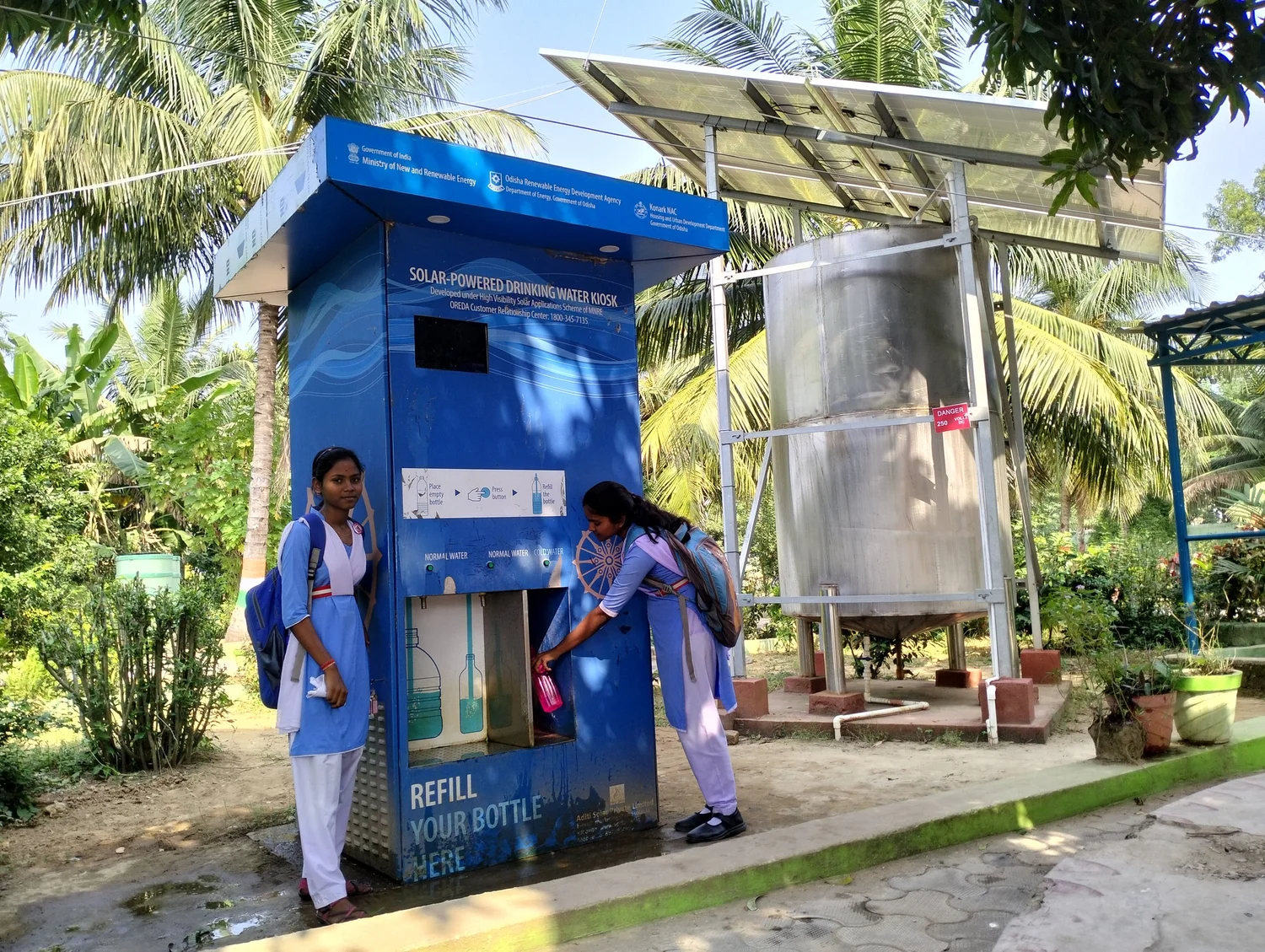
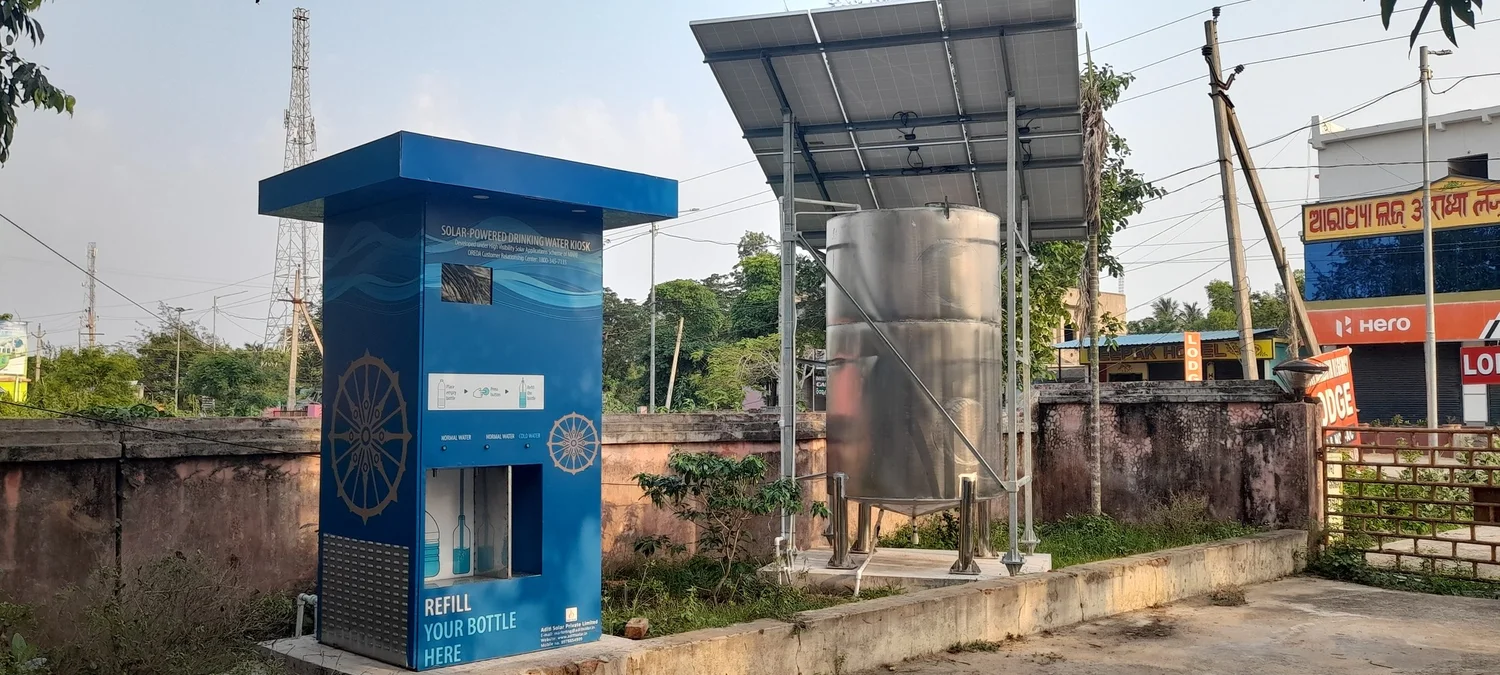
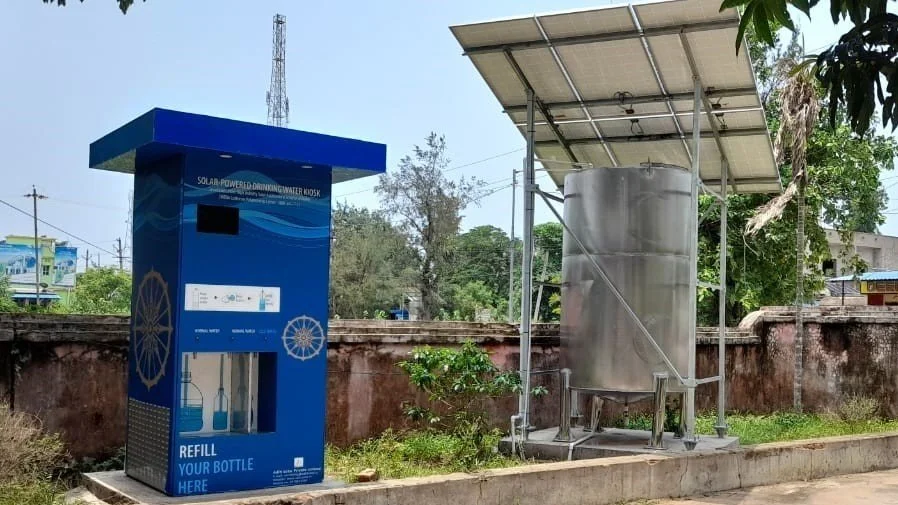
A self-powered purification and vending kiosk for villages, highways and remote sites. It runs with no grid connection and no diesel.
URBAN · GRID / HYBRID
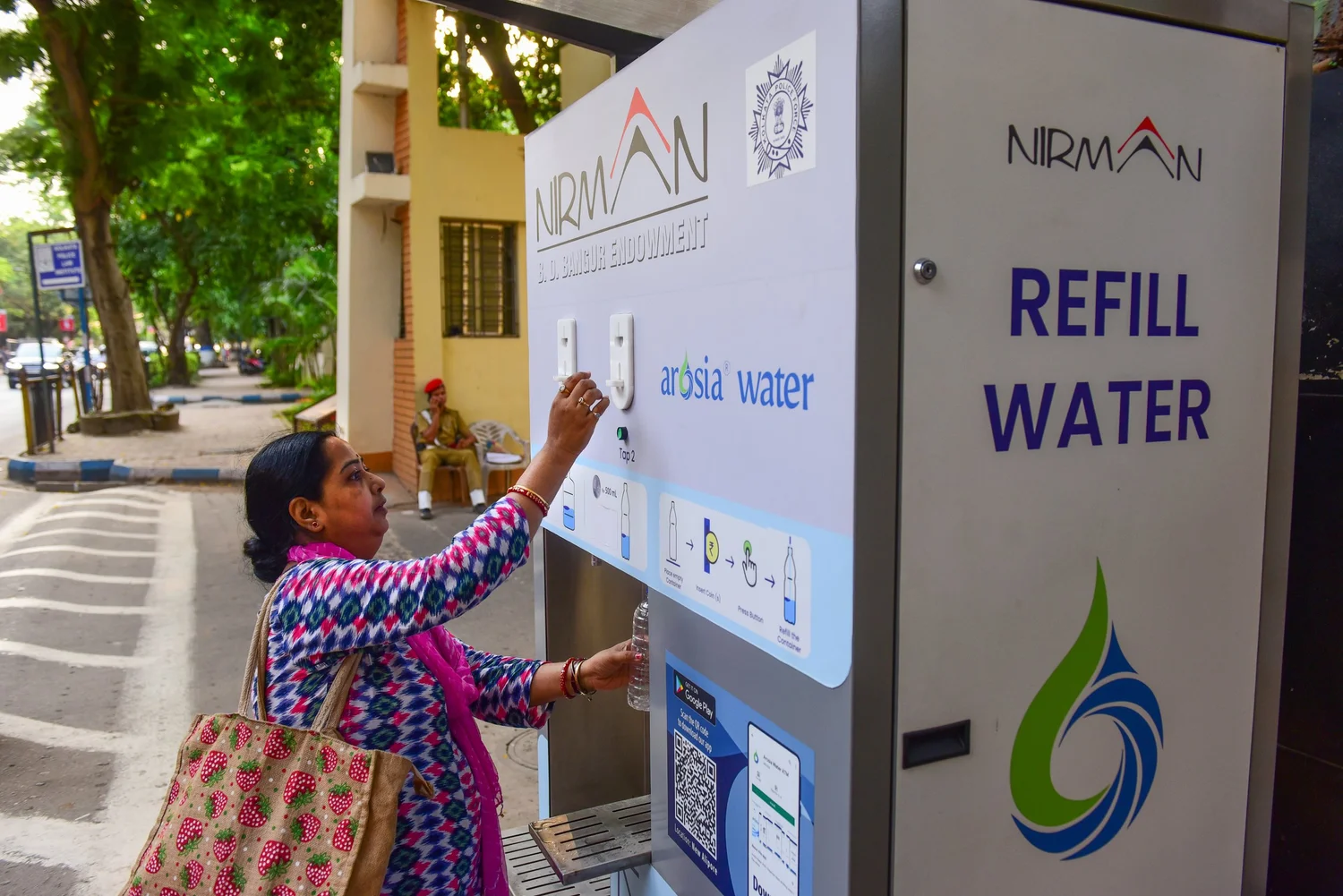
A high-throughput, cashless water vending machine for cities, rail and bus stations, campuses, industrial colonies and municipalities.
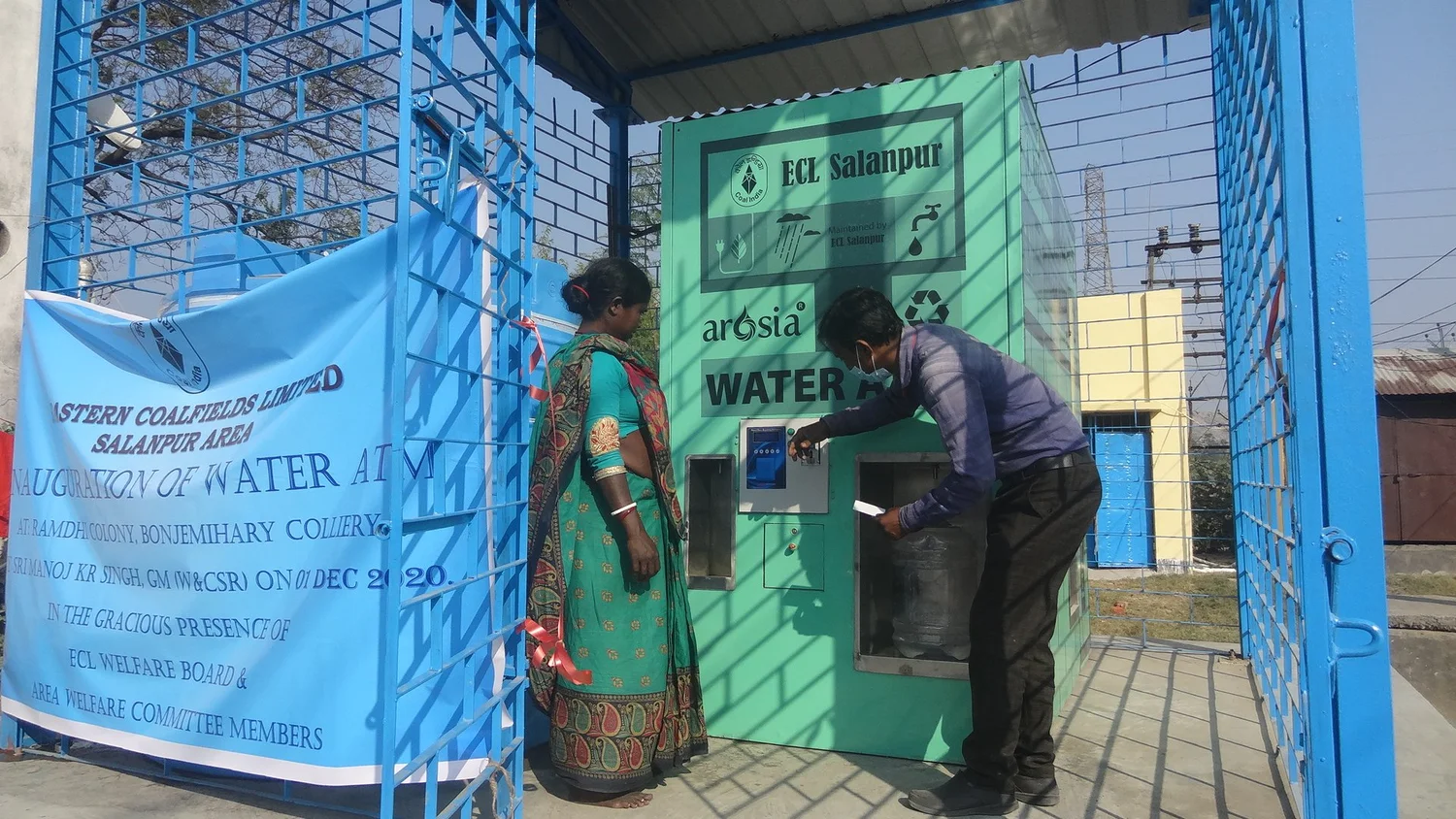
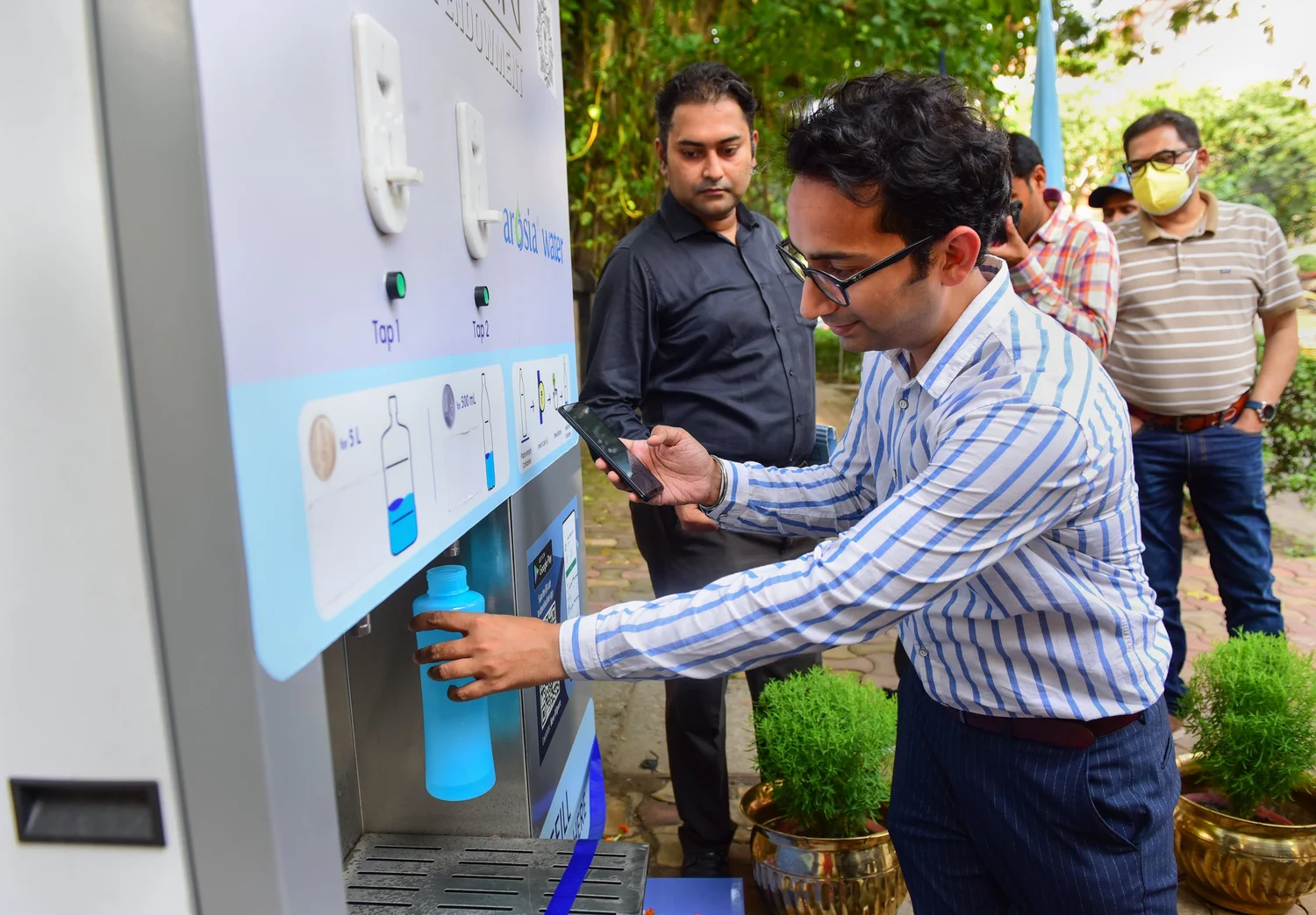
A water ATM is an automated, self-service kiosk that purifies water on site and dispenses it on demand. Users pay per litre with UPI, a smart card or a mobile wallet. Arosia water ATMs are IoT-connected, so water quality and machine health are monitored in real time.
Solar panels power the purification train and the dispensing unit, and battery storage covers night-time and cloudy days. That gives off-grid villages safe water 24×7, avoids coal-fired grid power and diesel, and brings running costs down sharply.
We use a patented, chemical-free process based on electrocoagulation. A controlled current releases coagulant ions from electrodes, and these bind fluoride into flocs. The flocs are then separated and filtered, which brings fluoride within the BIS IS 10500 limit for drinking water.
No. Arosia specialises in non-RO purification that combines electrocoagulation with nanofiltration. Essential minerals stay in the water, and wastage is kept to about 2–4%.
Sensors watch turbidity, ORP, UV lamp intensity and flow continuously, because sudden changes in these flag a contamination risk early. Scheduled samples are also checked with a rapid enzyme-based E. coli test. If any check fails, the kiosk stops dispensing, flushes, disinfects and retests before it reopens.
A live virtual model of a physical water system. Our twin mirrors each kiosk using IoT data, so AI can forecast contamination risk, predict maintenance needs and optimise energy before problems ever reach users.
Government bodies and municipalities, PSUs and CSR programmes, panchayats, schools, industrial townships and private site owners. We handle design, installation, operation and impact reporting.
Planning a water ATM deployment, a CSR project or a fluoride-affected district programme? Talk to our team.