Water quality you can prove, down to the bacteria.
Arosia combines real-time IoT water quality monitoring with E. coli detection and multi-barrier treatment. Unsafe water is caught and stopped before it reaches a single cup.
Why bacteria are the hidden risk in drinking water
Fluoride and arsenic harm people slowly. Bacteria can harm them within a day. E. coli is the global indicator of faecal contamination. When it is present, pathogens that cause cholera, typhoid, hepatitis A and diarrhoeal disease may be present too. Diarrhoeal disease is still a leading cause of illness in young children in India. Most of it is preventable with safe water.
Contamination often happens after treatment, through a cracked pipe, a dirty storage tank, a failed UV lamp or an unwashed container. A plant tested once a month can't catch that. Monitoring has to be continuous, automatic and able to act.
What we measure, and the limits we hold to
Every Arosia kiosk monitors raw and treated water. Limits follow the Bureau of Indian Standards drinking-water specification, IS 10500:2012.
Parameter
IS 10500 acceptable limit
How we check
E. coli
Not detectable in any 100 mL
Rapid enzyme-based test on scheduled samples
Total coliforms
Not detectable in any 100 mL
Periodic sample testing
Turbidity
1 NTU (5 NTU permissible)
Continuous inline sensor
pH
6.5–8.5
Continuous inline sensor
Total dissolved solids
500 mg/L (2,000 permissible)
Continuous conductivity sensor
Fluoride
1.0 mg/L (1.5 permissible)
Inline ion-selective sensor and lab checks
Arsenic
0.01 mg/L
Periodic sample testing
Iron
1.0 mg/L
Periodic sample testing
Nitrate
45 mg/L
Periodic sample testing
UV lamp intensity
Kept above the disinfection set-point
Continuous UV sensor with interlock
ORP, temperature, flow
Site baseline
Continuous sensors for early warning
How E. coli detection works at an Arosia kiosk
We use two layers of detection. Fast sensors raise the alarm in seconds, and a biological test confirms the result.
STEP 1
Early warning
Sudden jumps in turbidity, a drop in ORP or a weak UV lamp all signal a contamination risk. The sensors catch these within seconds.
STEP 2
Confirm
A rapid enzyme-based test detects E. coli activity in hours, compared with one to two days for traditional lab culture.
STEP 3
Lock & alert
The kiosk stops dispensing, flushes the line and alerts the operator and the local authority by SMS and on the dashboard.
STEP 4
Treat & retest
The system disinfects, fixes the cause and reopens only after a clean retest. Every action is time-stamped.
Treatment: four barriers against bacteria
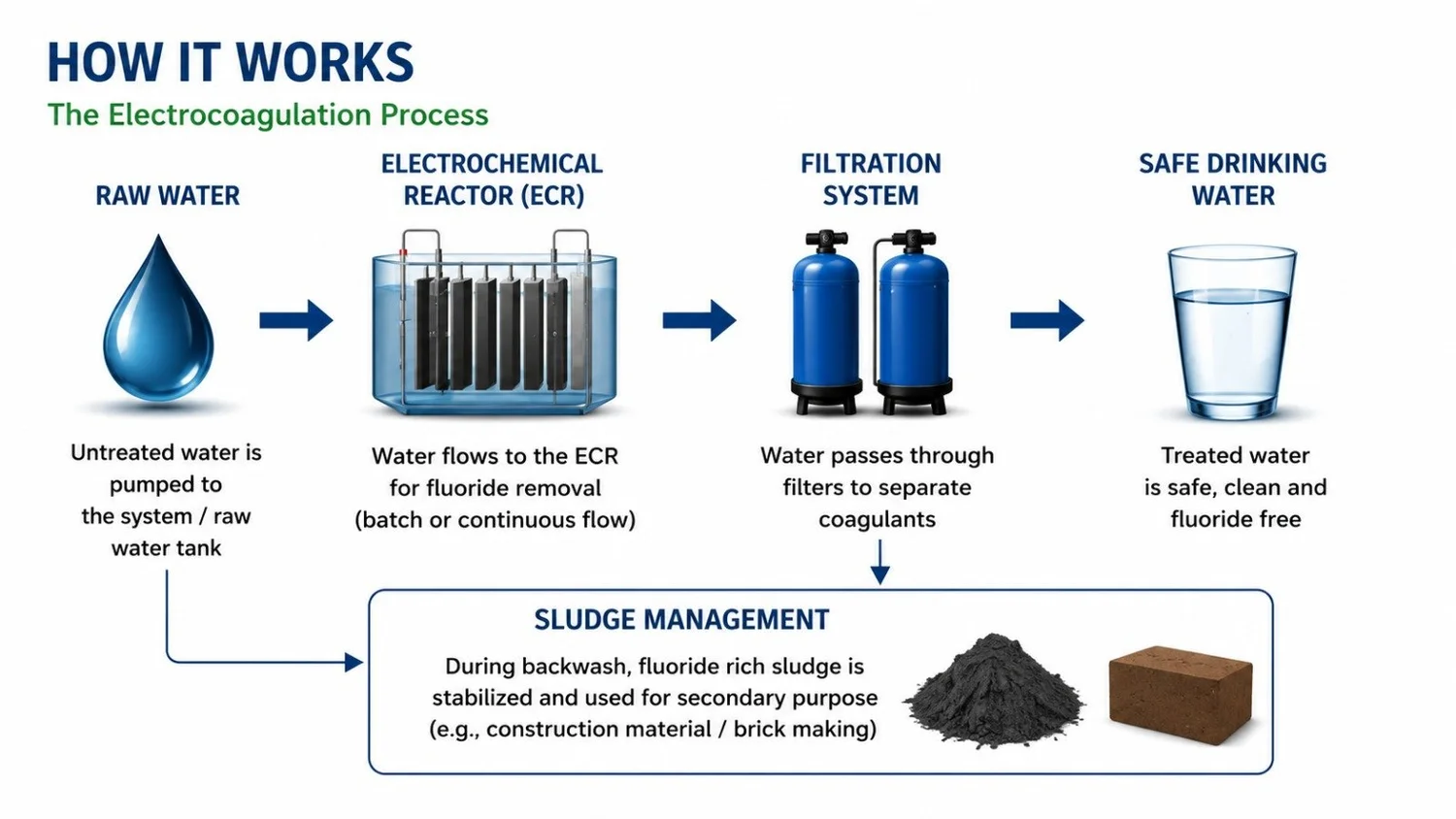
Electrocoagulation. Our patented cell forms flocs that trap bacteria along with fluoride, arsenic and iron, and settles them out without chemicals.
Nanofiltration. Membrane pores block bacteria, most viruses and microplastics, while useful minerals stay in the water.
UV disinfection. Ultraviolet light damages the DNA of any remaining microbes so they cannot multiply. It adds no chemicals and changes no taste.
Safety interlock. The tap opens only when sensors confirm that every barrier is working. If the UV lamp weakens, dispensing stops.
AI that sees contamination coming
Each kiosk's digital twin learns its normal patterns. When readings drift, the AI flags a risk before a limit is broken. Examples include turbidity rising after heavy rain, a UV lamp nearing end of life, or a tank that hasn't been cleaned on schedule. Operators get a work order instead of an outbreak.
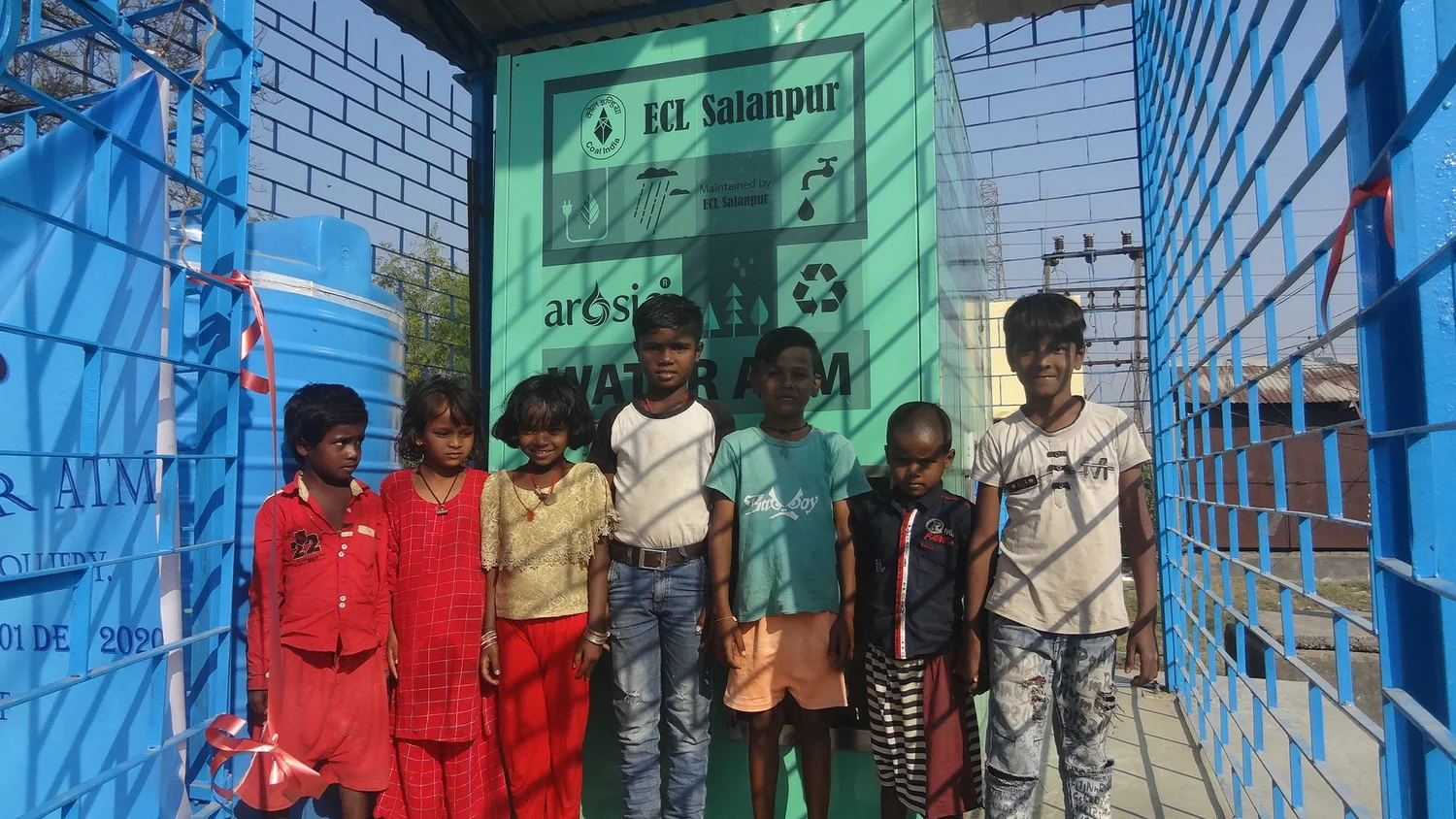
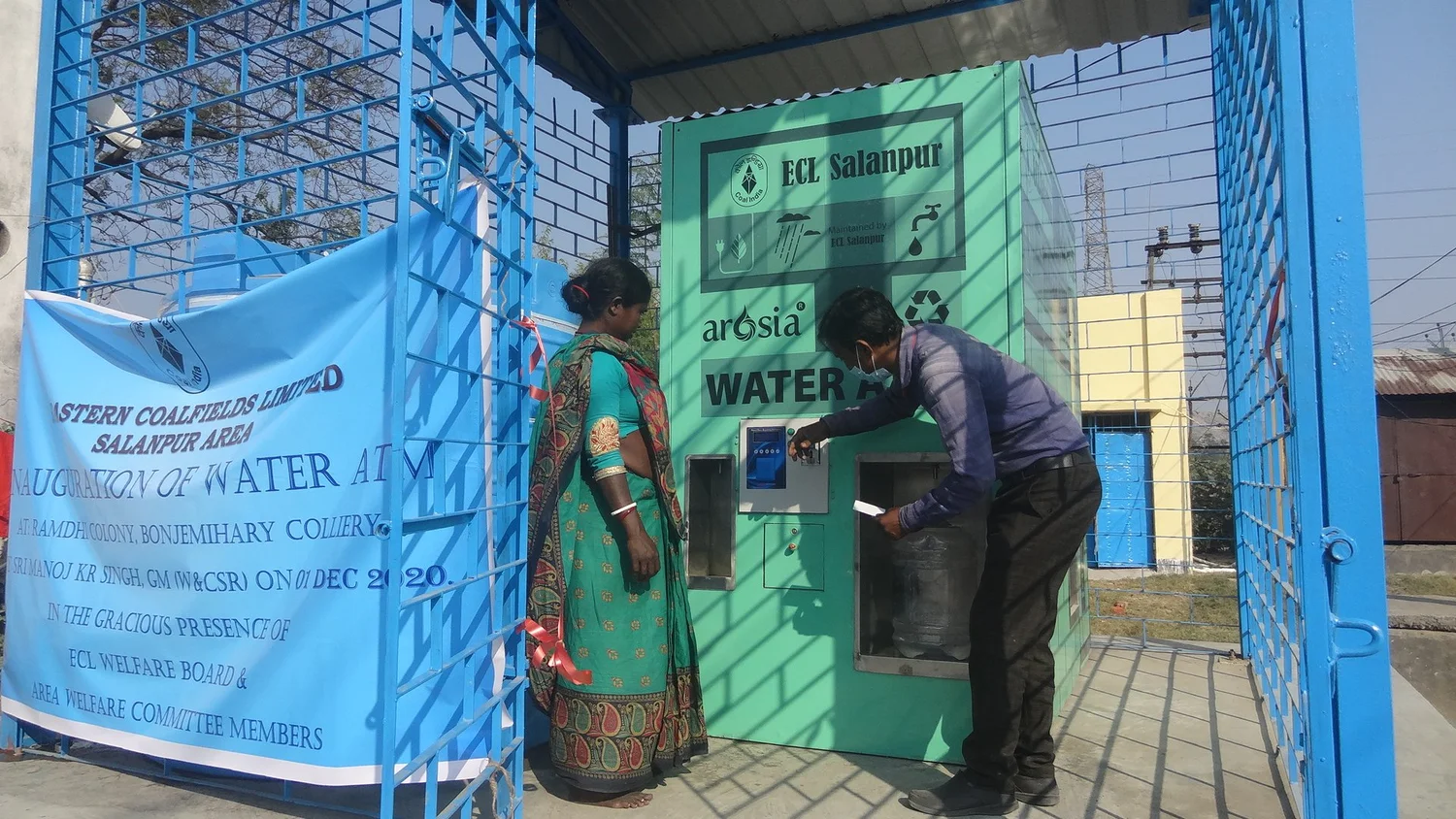
Every litre verifiedSalanpurTreatment process
Reports for authorities, CSR and audits
Every reading, test result, alert and corrective action is stored with a time stamp and location. Panchayats, municipalities, PSUs and CSR teams get monthly water quality reports. Health departments can see the same data live on the dashboard.
E. coli is the standard indicator of faecal contamination. If it is present, organisms that cause cholera, typhoid and diarrhoea may be present too. IS 10500 and the WHO both require that no E. coli be detectable in any 100 mL sample.
How fast can E. coli be detected?
Traditional lab culture takes one to two days. Enzyme-based rapid tests detect E. coli in hours. Continuous sensors flag a contamination risk within seconds, so a kiosk can stop dispensing before a sample result is ready.
What happens if contamination is detected?
The kiosk stops dispensing, flushes the line and alerts the operator and the authority. It runs extra disinfection, fixes the faulty component and reopens only after a clean retest. Every step is logged.
Which parameters does IoT water quality monitoring measure?
pH, TDS or conductivity, turbidity, ORP, temperature, fluoride, UV lamp intensity, flow and tank level. Periodic tests also cover E. coli, coliforms, arsenic, iron and nitrate.
How is bacteria removed from drinking water?
Through four barriers: electrocoagulation flocs that trap microbes, nanofiltration membranes that block them, UV light that inactivates what remains, and a safety interlock that keeps the tap closed unless every barrier is working.